Week 5
Readings:
I found these readings really powerful, but the one that spoke to me the most was AI, AIN’T I A WOMAN? What stood out to me was the idea that AI is not completely neutral and can reflect biases depending on how it is designed, trained, and how it identifies different groups of people, especially people of color. It made me think more critically about the technology we use and the assumptions built into it.
Another reading that really stayed with me was Metaphors and Imaginaries in Design Research for Change. I found the idea of mental models especially interesting because it connects closely to what we have discussed in class. The way we think about something shapes how we understand it, interact with it, and even imagine how it could be different. That made me realize how powerful our assumptions and ways of thinking can be when designing or creating new ideas.
What are some metaphors that shape the way you think or live, even if you haven’t always been aware of them?
Video:
One of the ideas that stood out to me the most from this lecture was the importance of mental models and how strongly they shape the way we think and understand the world around us. Mental models influence how we interpret information, how we solve problems, how we interact with objects and systems, and even how we understand other people. What I found especially interesting is that we often use these mental models without even realizing it. They are built from our previous experiences, culture, education, habits, and the different environments we have been exposed to throughout our lives.
Because of this, two people can look at the exact same situation and understand it in completely different ways. Their mental models can affect what they notice, what they assume, and what they expect to happen. I think this is especially important in design because we cannot always assume that everyone will understand something in the same way that we do. A design that feels obvious or intuitive to one person might be confusing to someone else because they have a different set of experiences and expectations.
GenAI as Creative Material


Process Book
Step 2
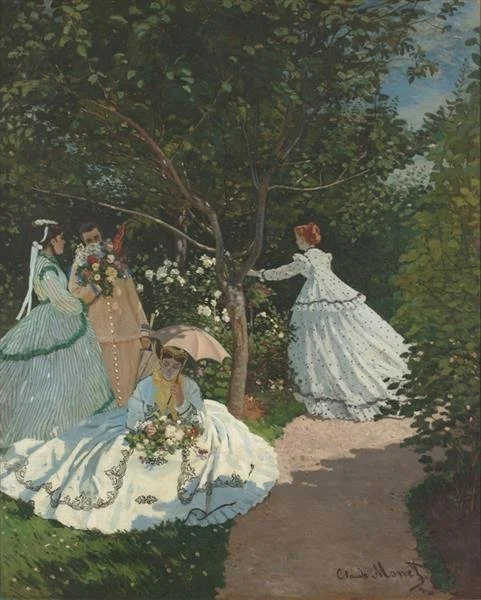
Women in the garden
1. When and where was it made?
Claude Monet painted Women in the Garden around 1866–1867 in Ville-d’Avray, near Paris, France. At the time, France was ruled by Napoleon III during the Second French Empire. Fashion was also changing, with women wearing large skirts, crinolines, ribbons, layered dresses, and fitted bodices.
2. Medium
The painting was made with oil paint on canvas. Monet worked on a very large canvas and focused on capturing natural light, shadows, color, and the outdoor environment. The women’s white dresses were especially useful for showing how sunlight and shadow changed the appearance of the fabric.
3. How was it received?
The painting was rejected by the Paris Salon in 1867 because its brushwork and everyday subject were considered too unconventional.
4. How is it perceived today?
Today, it is considered an important early Impressionist work and an important example of Monet’s experimentation with light, color, and outdoor painting.
Step 4
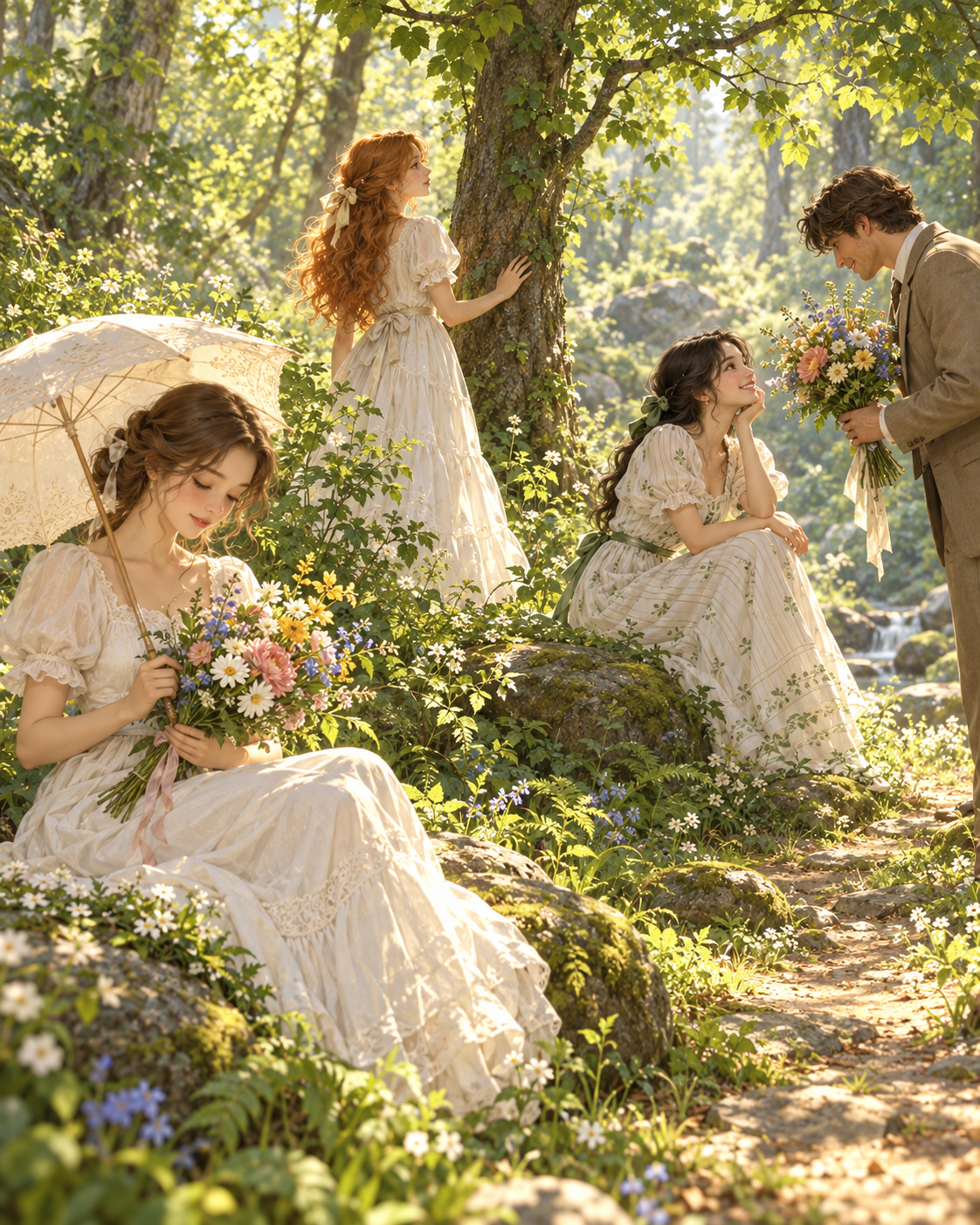
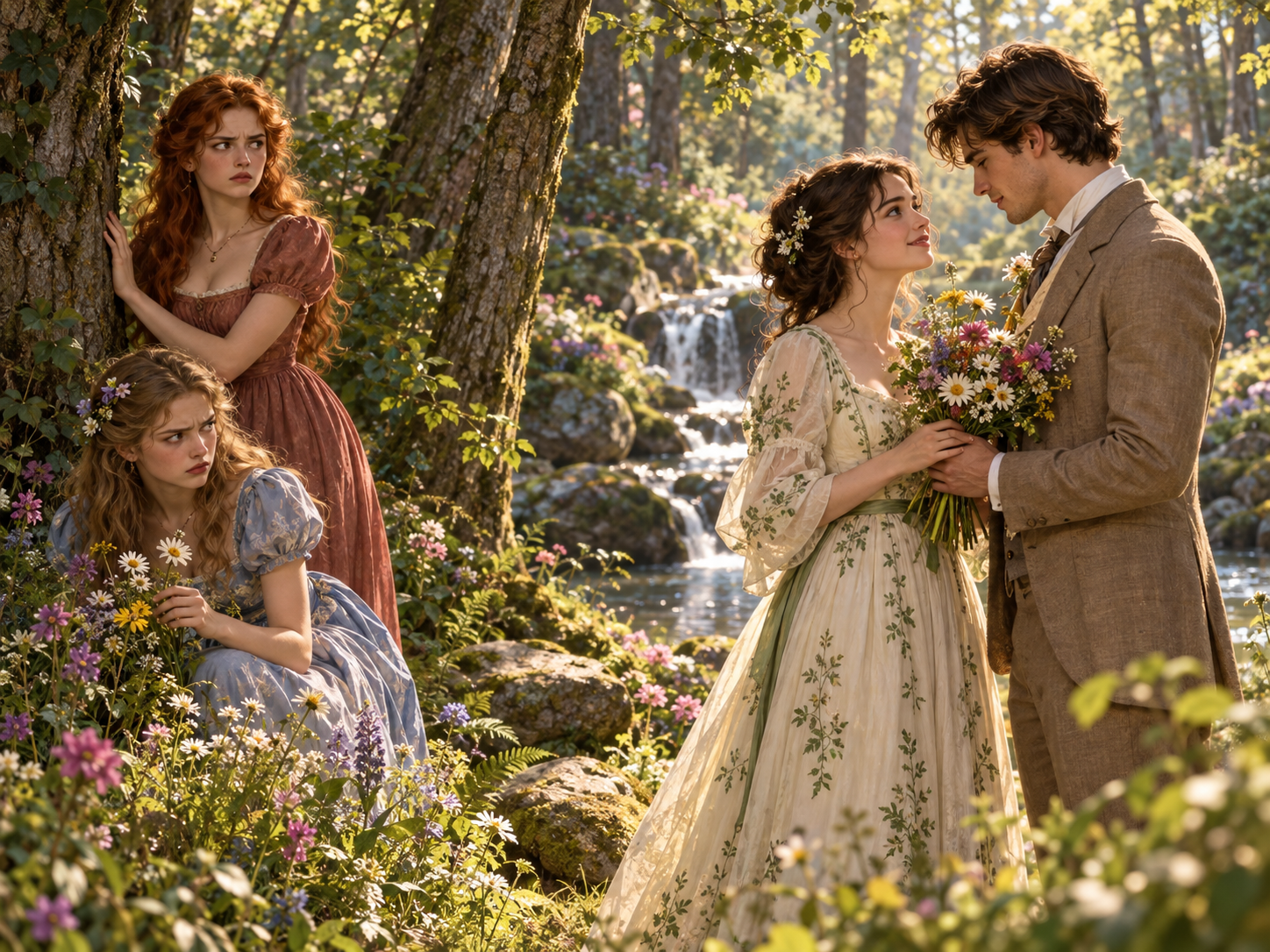
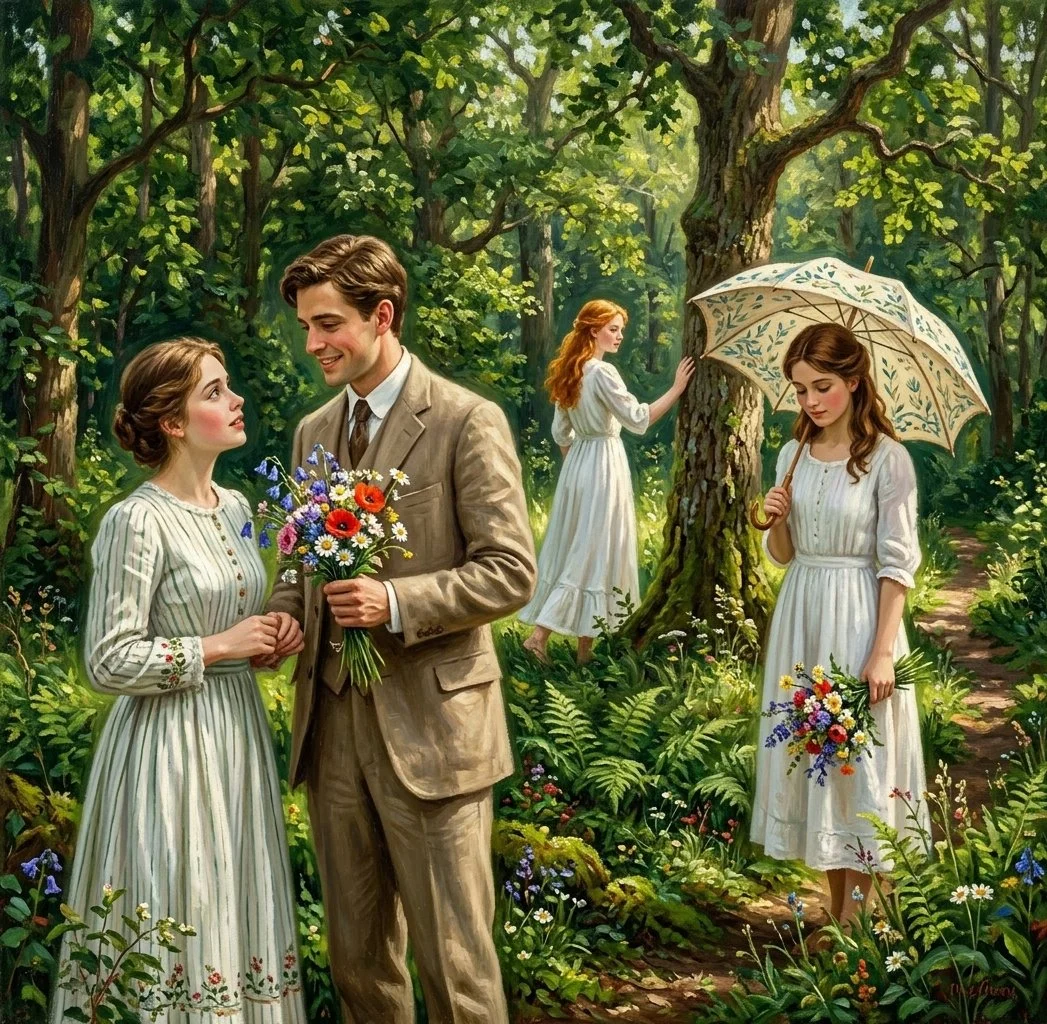
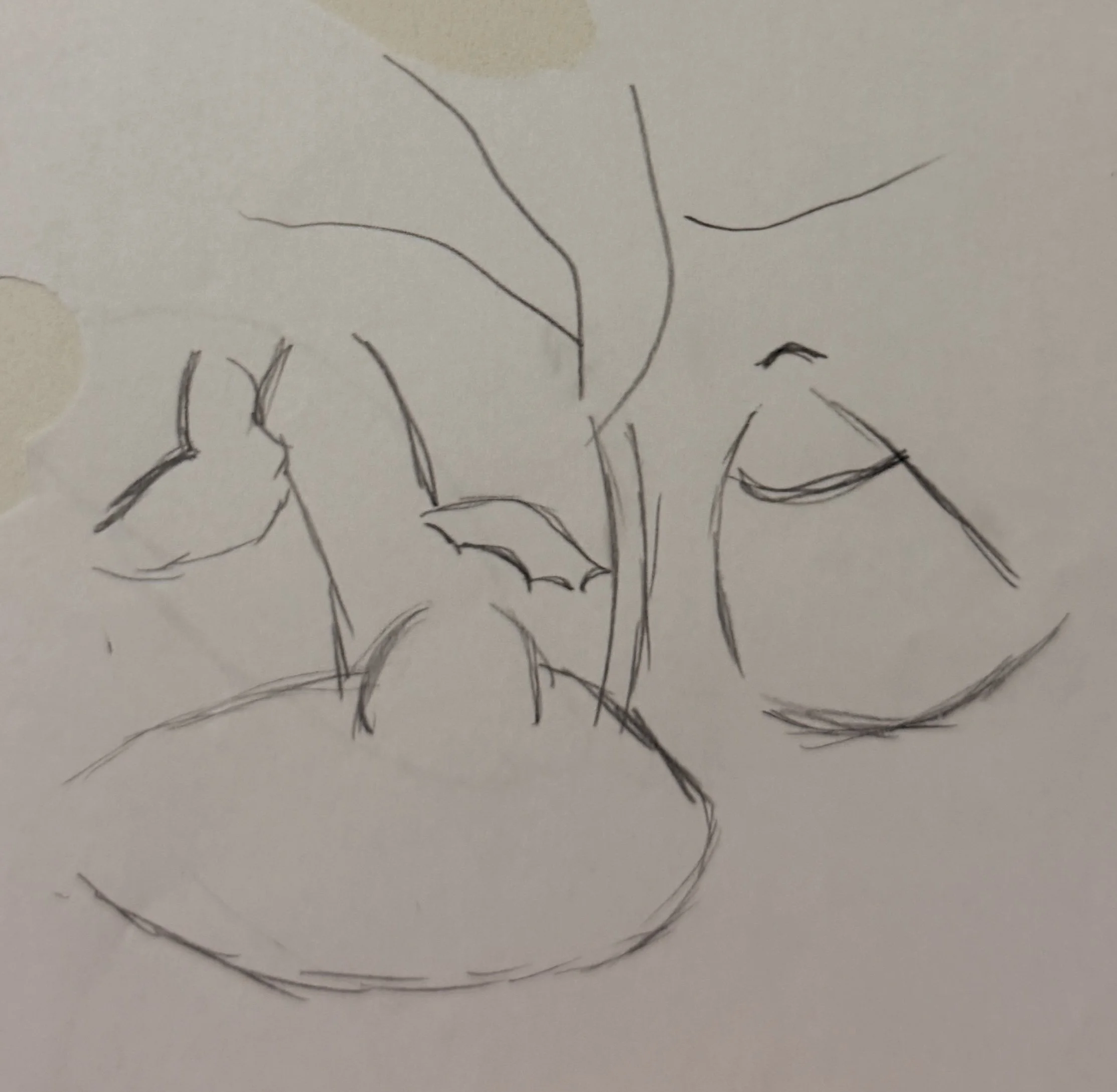
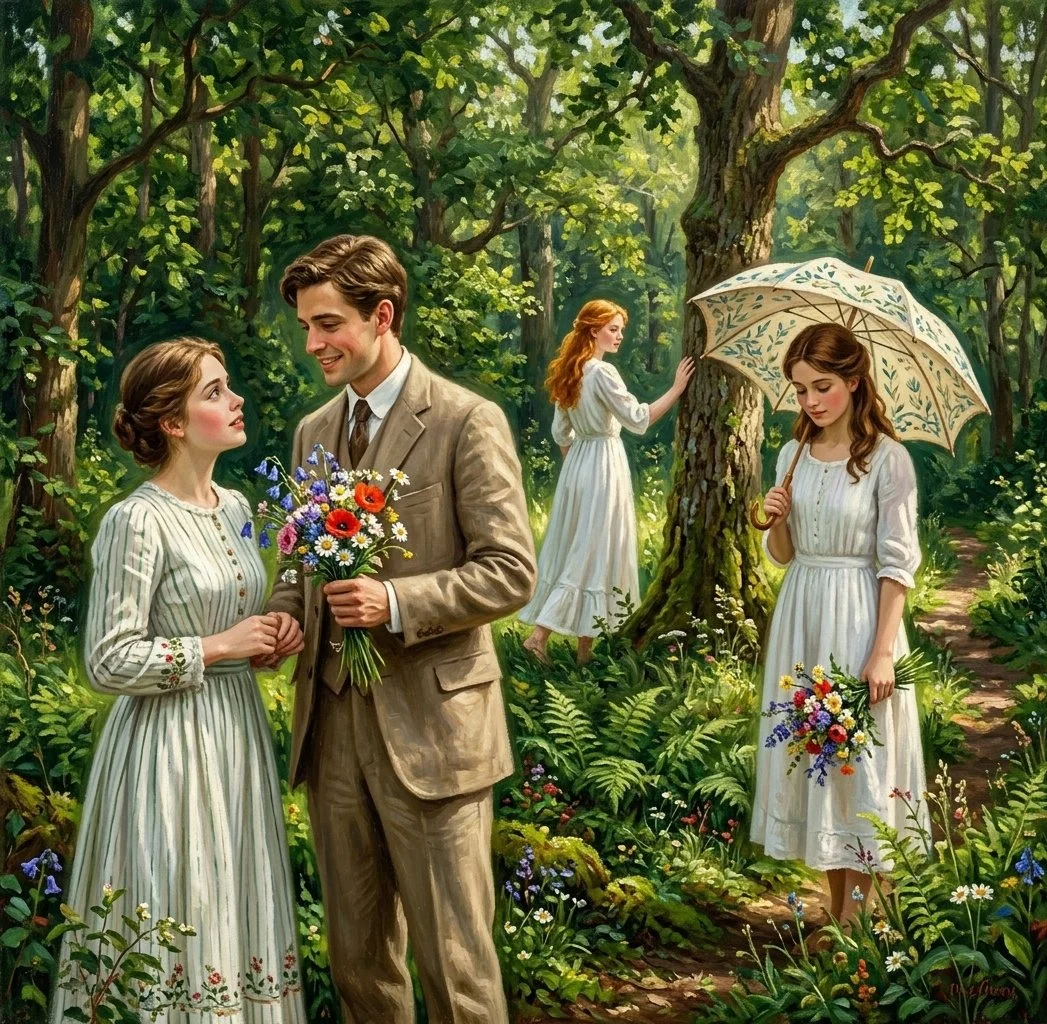
Three girls and a man in a forest; all the girls are wearing white dresses. One girl, with brown hair, has an umbrella and is looking at some flowers that she is holding- a variety of different flowers- and has a peaceful look. Another girl, who is ginger, is wandering in the forest; her left hand is holding a tree but not putting weight on it, the third girl has a white dress with stripes and small green details; she is talking with the man, who’s wearing a light brown suit, holding flowers with various colors, intending to give them to the girl with green details; she is intrigued and charmed by him. The day is bright, with a bright green forest; there's a path, but none of the girls are walking on it. See my image prompt, a rough sketch, that illustrates these dynamics. There should be no sketch lines, no pencil marks, no outlines in the final image.
Step 5
Step 6
3 AI platforms

Chatgpt

Firefly
Gemini
Step 8
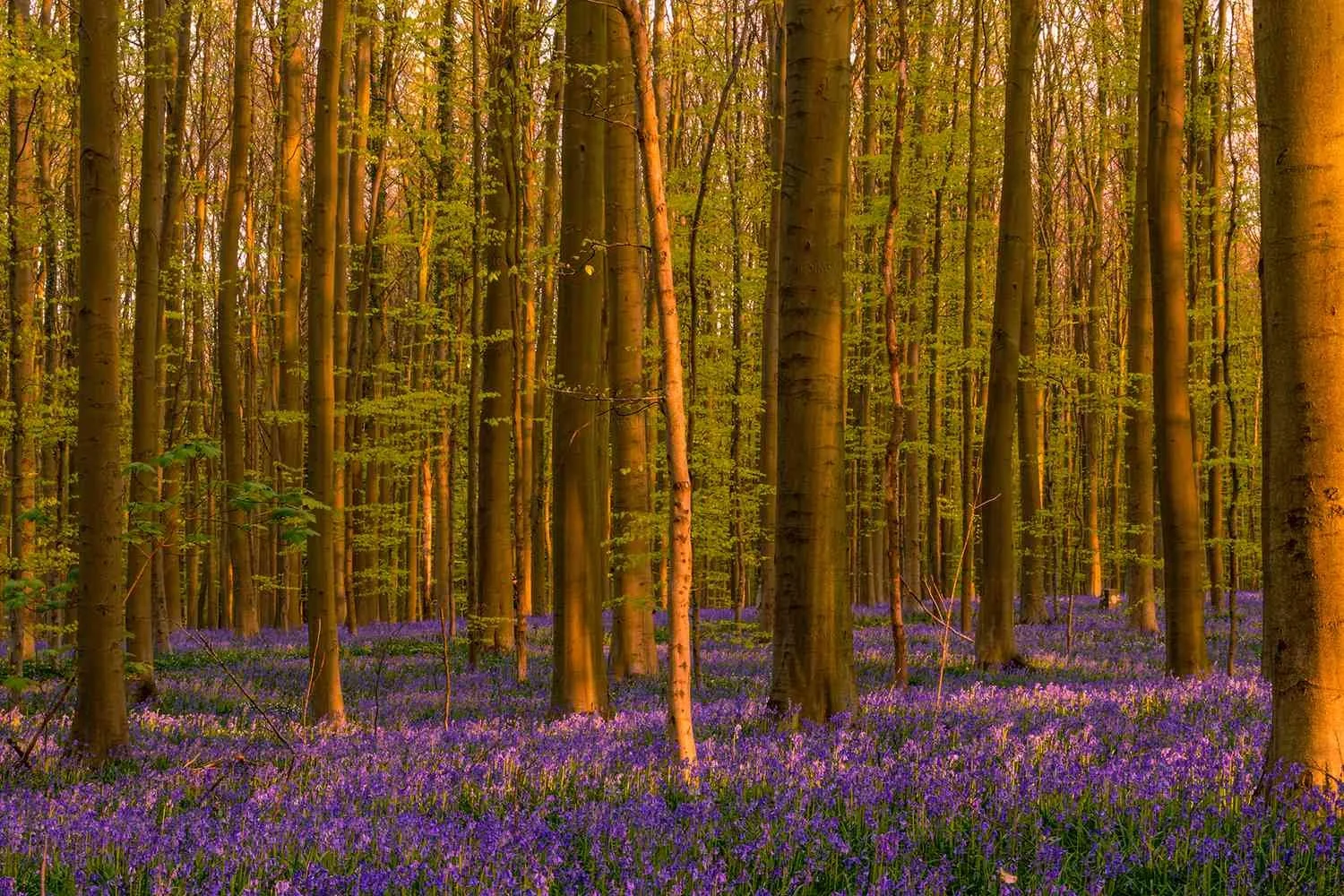
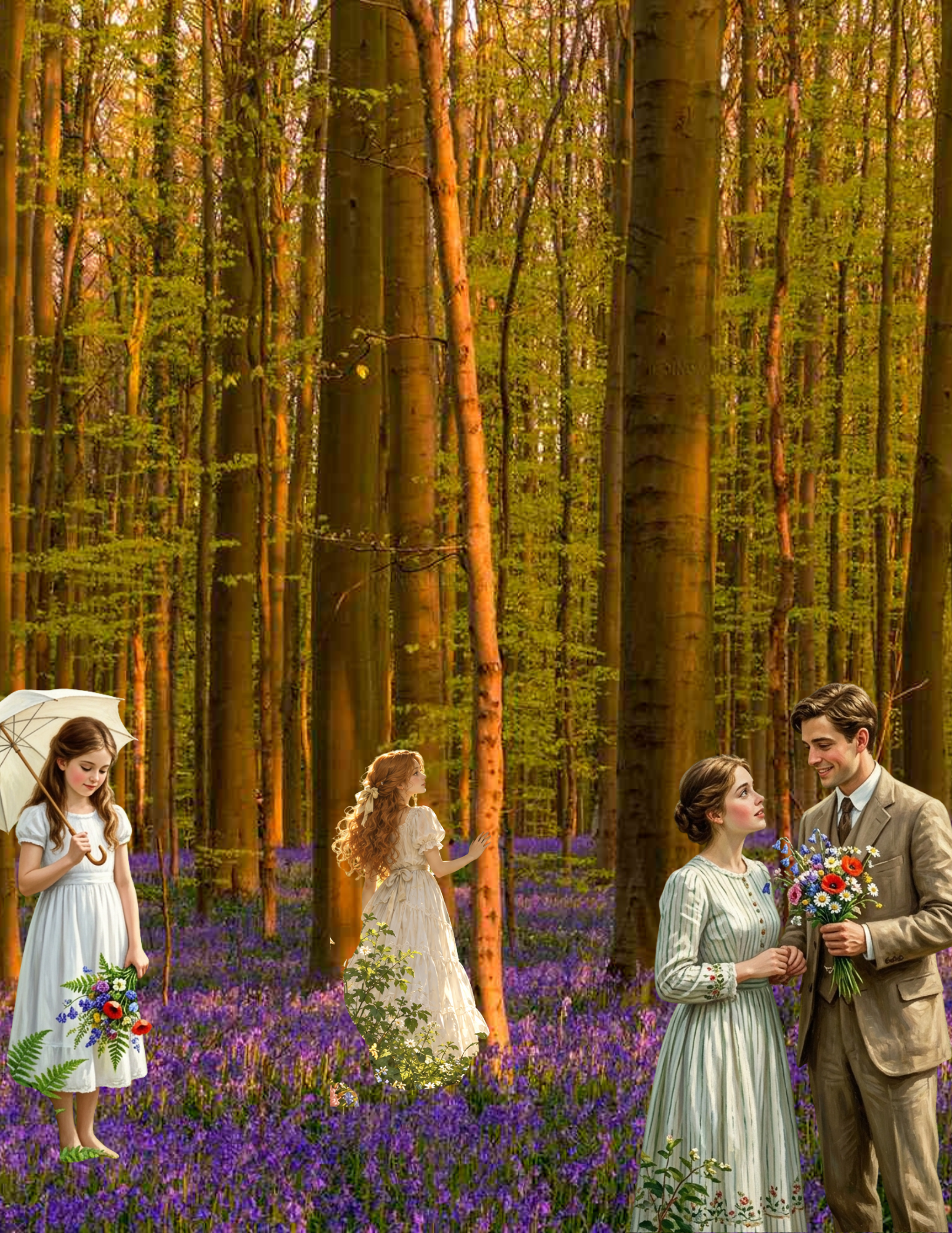
Mixed a painting from another artist and added elements from all the paintings.
A girl is meeting her lover in the forest while her two younger sisters are taking a walk nearby, each for a different reason. The middle sister, who has ginger hair, is thinking about love and how beautiful it might be to one day have a husband. As she walks, she reminisces about her parents’ relationship, looks up at the trees, and takes in the peaceful smells and sounds of nature.
The youngest sister is searching for flowers, since she finds comfort, peace, and a different kind of love in nature and in the beauty of flowers. However, both sisters eventually notice their older sister receiving flowers from her “boyfriend.” Instead of feeling happy for her, they become angry and frustrated, creating a contrast between their own ideas of love and the reality of seeing their sister experience it.
Collage
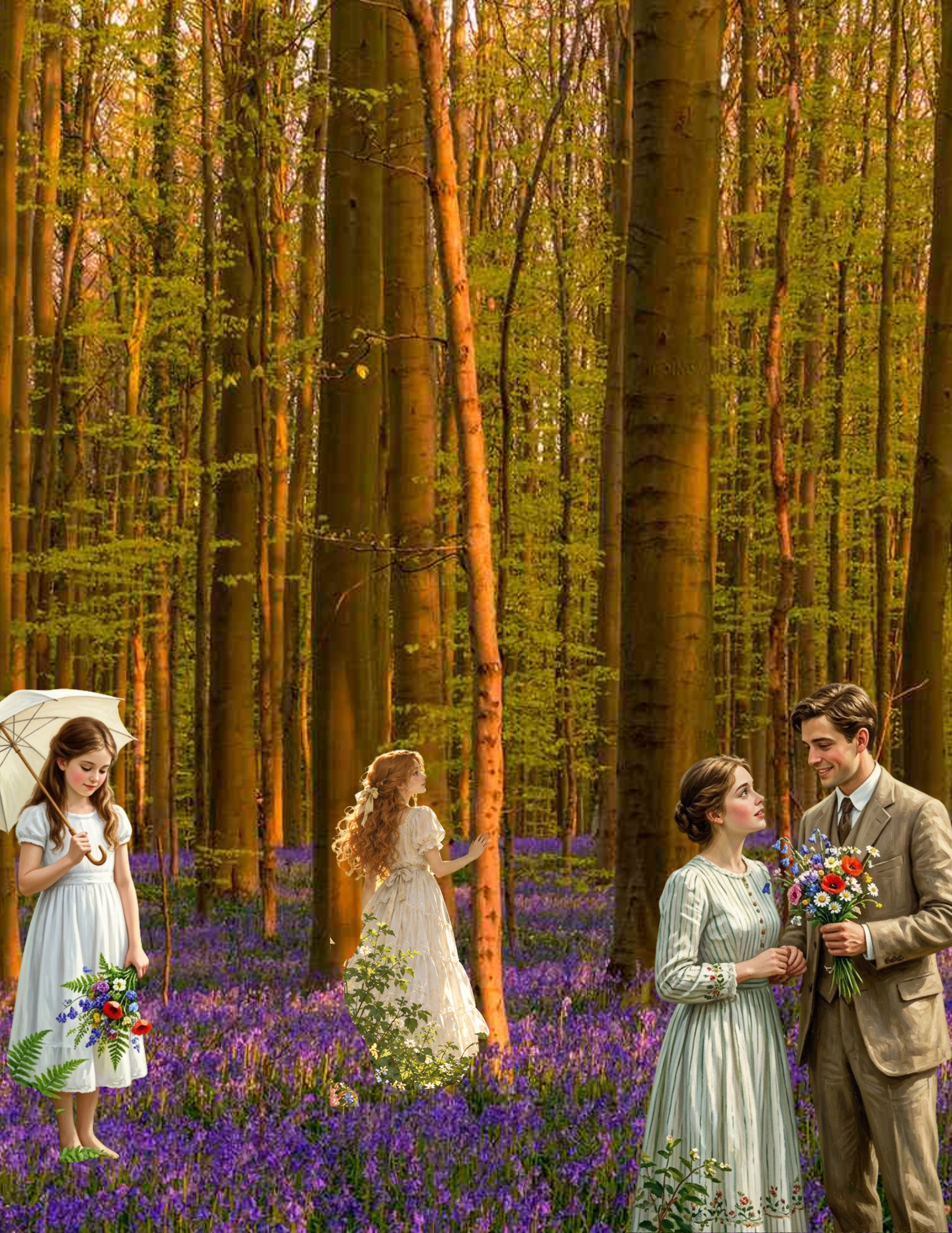
Step 10
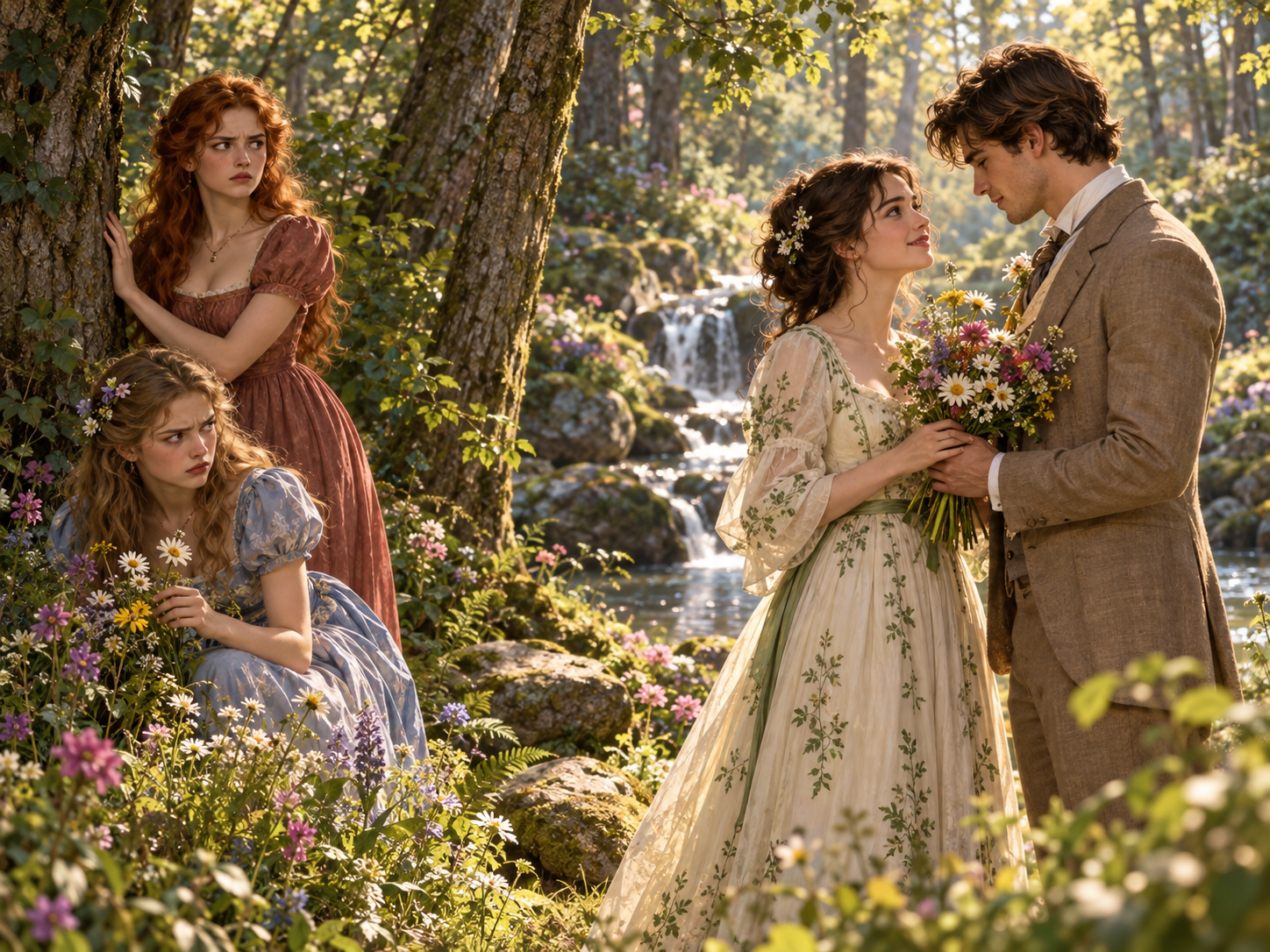
Chatgpt
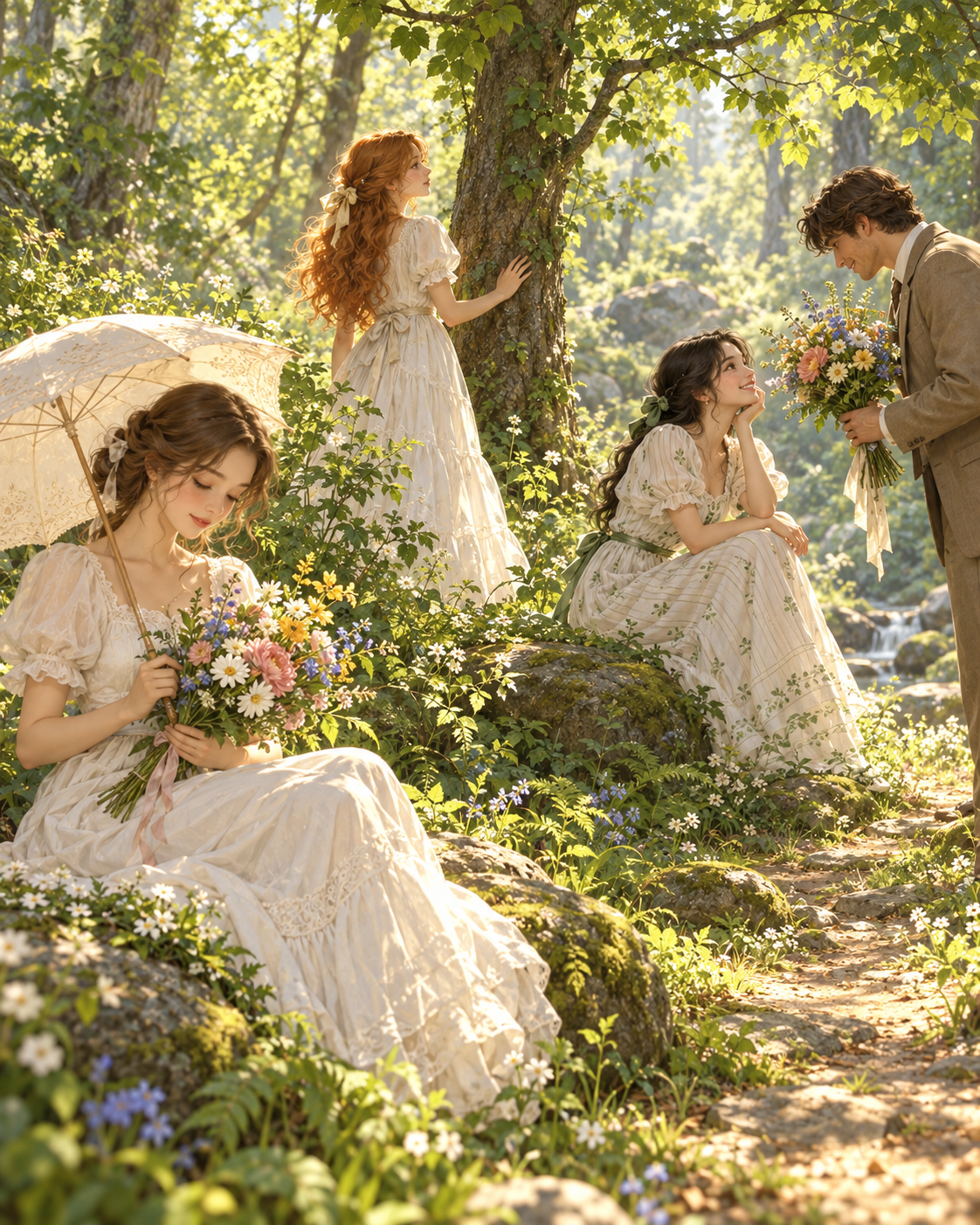
Gemini

Firefly
Reflection
Here are some points to address in your final analysis:
GEN AI SUMMARY
What did the systems seem to understand?
That I wanted to recreate the image with the description I gave it.
What did they ignore?
The girl’s dress color
What did they add that you never asked for?
They never asked for the girls’ ages
What seems easy for the tools?
Probably ChatGpt
What seems difficult?
In some drawings, all the girls look the same but with different dresses
Where do you see clichés, conventions, artifacts, or “AI-ness” (aka, slop)?
They made extra hands
What kinds of creative decisions were you making vs. what decisions was the system making for you?
The emotion that the girls have for her sister meeting her lover was something that I never specified; however,the Al assumed and added emotions for me
GEN AI MODELS ANALYSIS
Which tool gave you the most control?
ChatGPT
Which produced the most unexpected results?
Firefly
Which required the most prompting?
I didn't go further, but I think it required a bit more prompting
Which interpreted language most literally?
Firefly
Which seemed to rely most heavily on familiar visual conventions?
Firefly
Where did outputs begin to feel generic?
Yes, most of them lost the painting style
Did one tool encourage particular aesthetics or kinds of ideas?
Firefly displayed girls in different ways than I was expecting
Did changing your prompt substantially change the result or mostly produce variations of the same thing?
Yes, it created interesting variation
What could you accomplish more effectively yourself?
Maybe the description part of the prompt
What did the AI help you see or consider that you might not have generated otherwise?
The reactions and emotions the girls had.
