Week 3
Readings:
I would like to start my reflection by saying that I now understand the importance of prototyping much better. I feel that we all prototype in some way, but we don't always do it consciously. After watching these videos, I feel a lot more confident about the prototyping process.
The videos gave many great examples of how we can “play,” as I like to think about it, with cardboard and explore the different possibilities it offers. One of the most important things for me was learning how cardboard can be joined together in many different ways, giving us a lot of flexibility to build, experiment, and develop our ideas. There were still many things I had to figure out while working on my prototype, but I enjoyed the process and liked working on this assignment.
Was there something you discovered during your building process that surprised you, such as a new technique, material, or way of developing your idea?
Video:
The readings Bioplastics Cook Book and To Name is To Value helped me better understand the importance of plastic pollution and, more generally, the impact that we as humans have on the environment. These readings also helped with my research by allowing me to better understand how my endangered animal has been affected by human actions and by the current state of the environment.
On the other hand, the readings Cardboard Modeling and An Unexpected Rapport: Mushrooms, a Designer + Everyone Else helped me think more carefully about the materials I could use for my project. They made me consider not only how a material looks, but also how it can be manipulated, connected, and used to represent my ideas. After reading them, I went to the art store and bought different materials that I could experiment with while building my endangered animal.
Endangered Animal
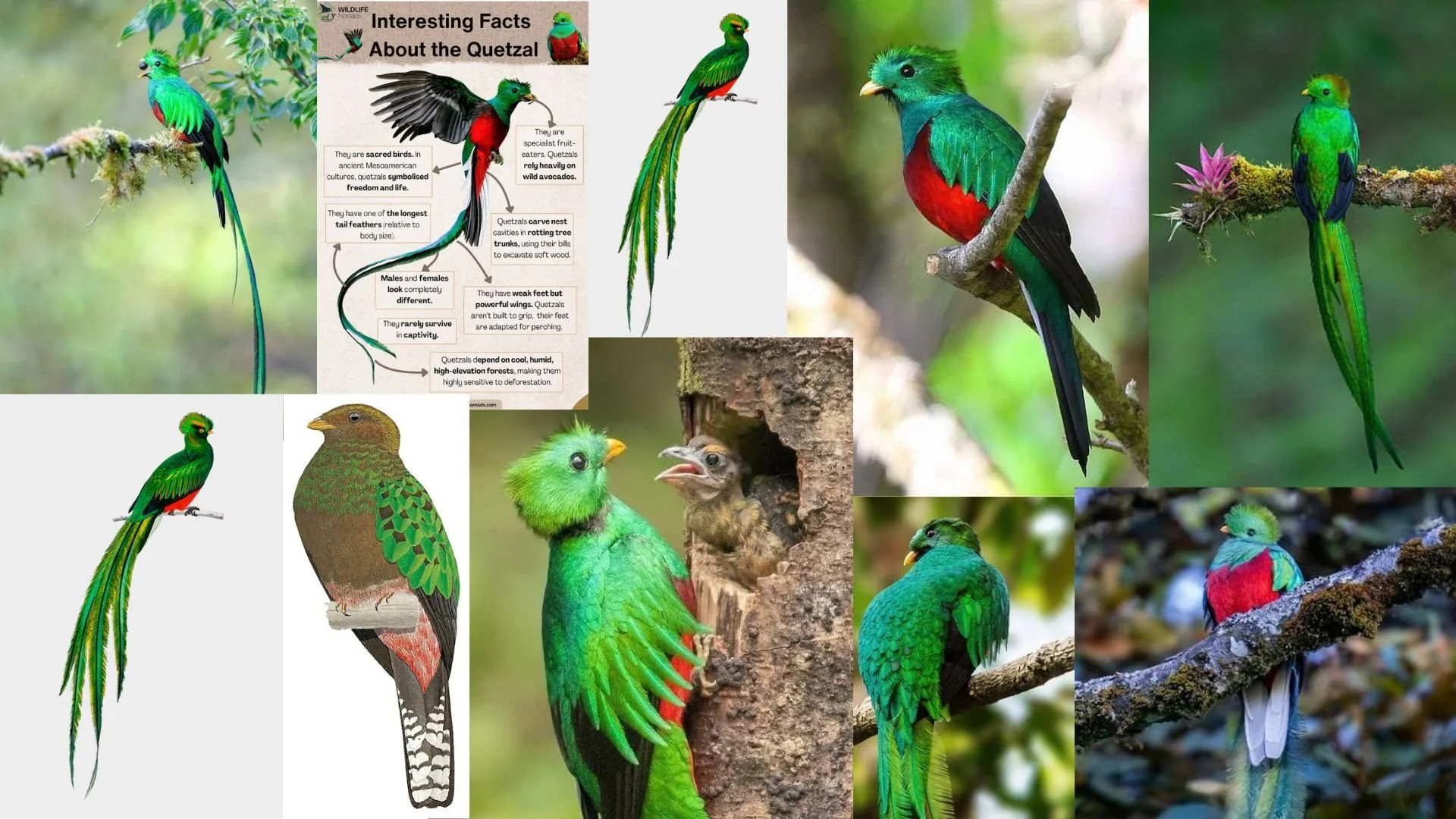
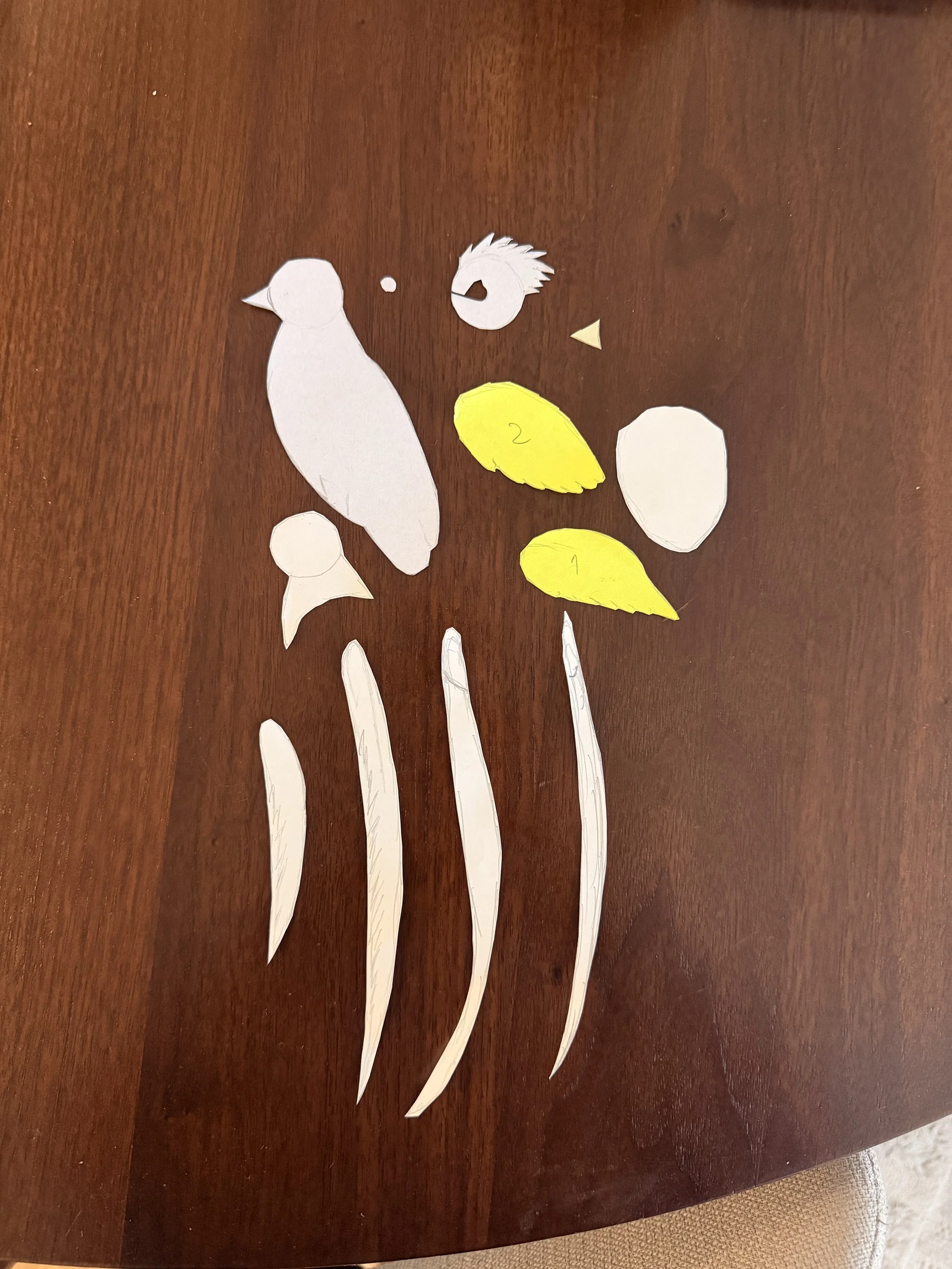
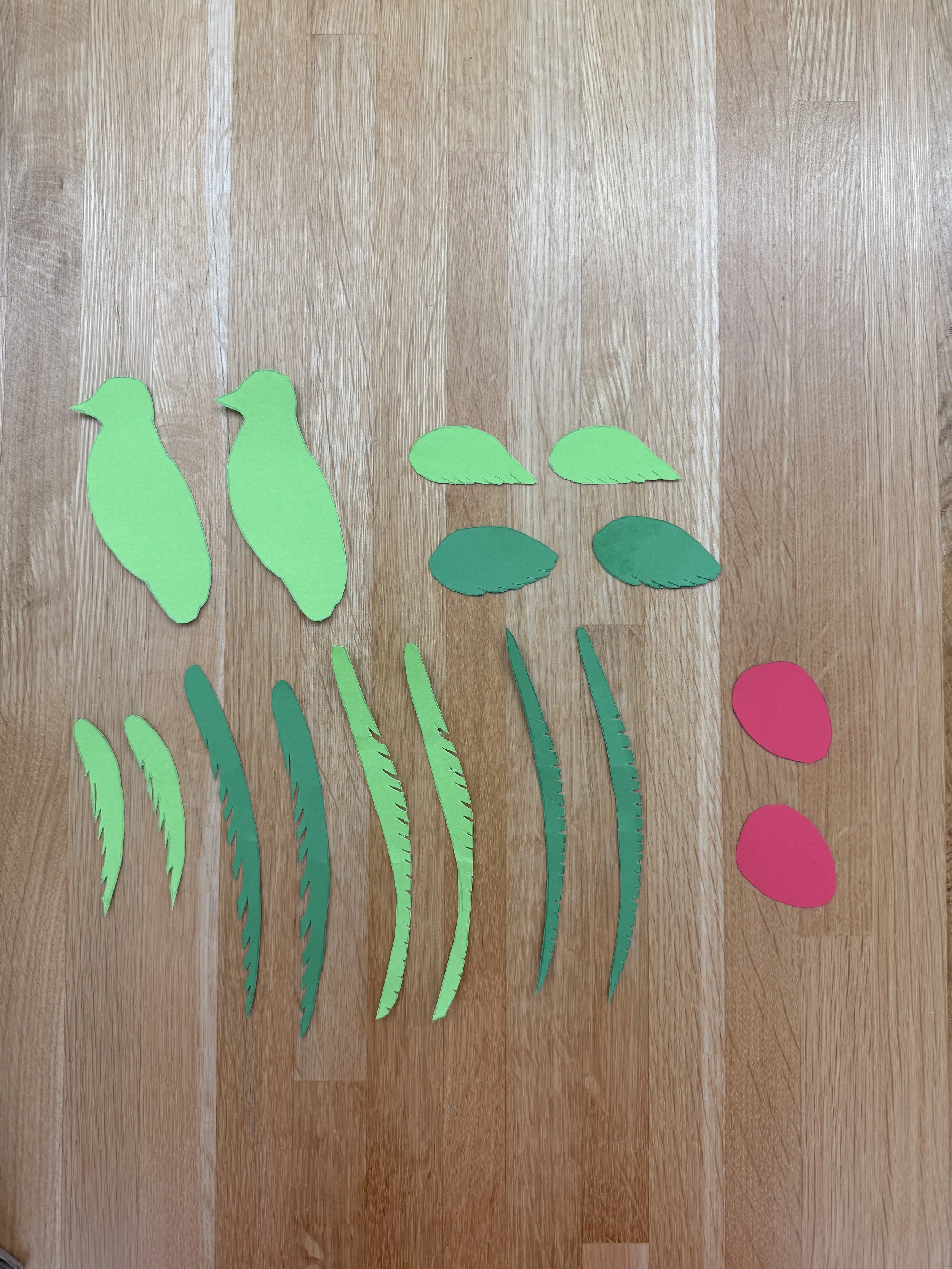
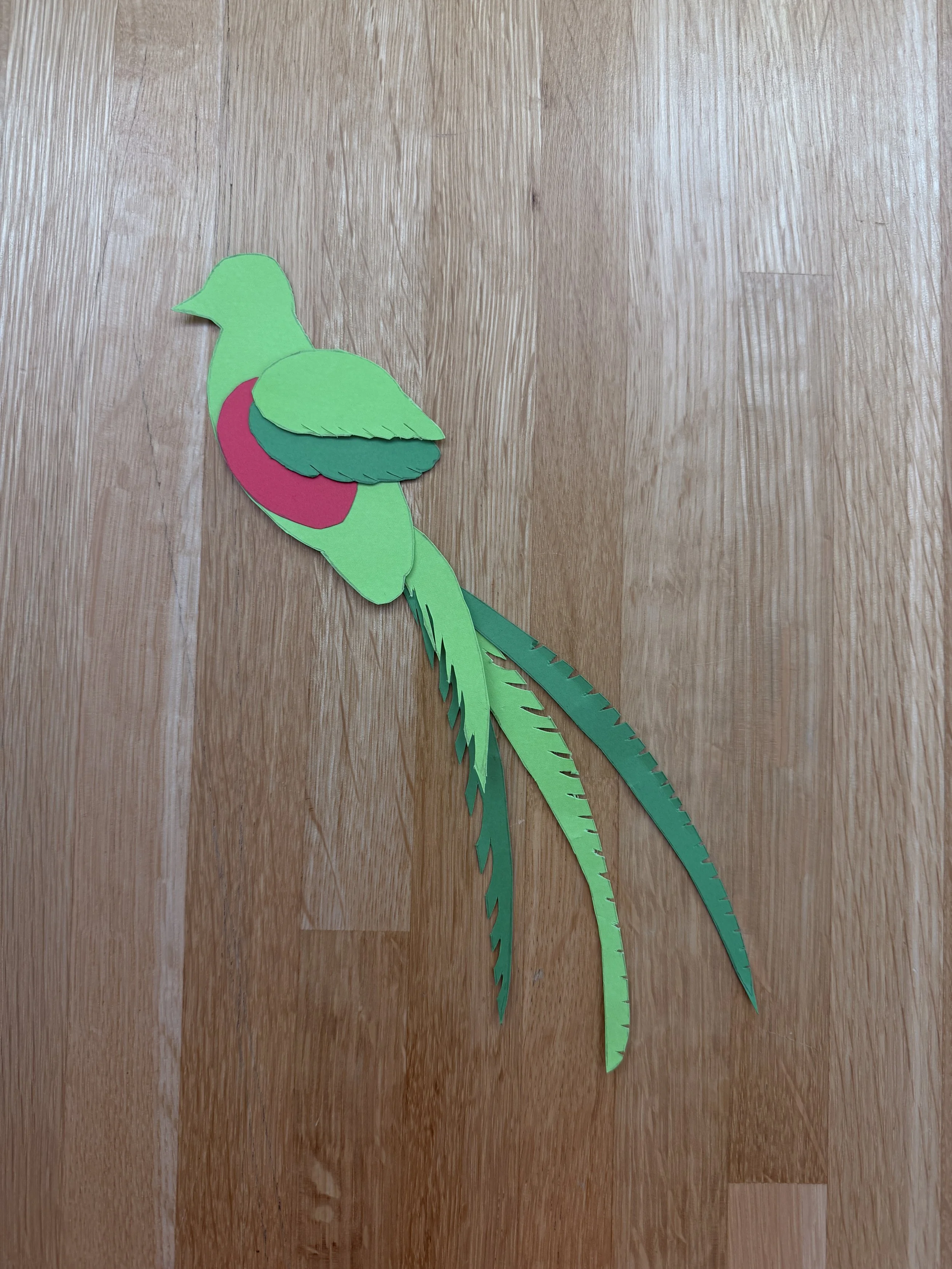
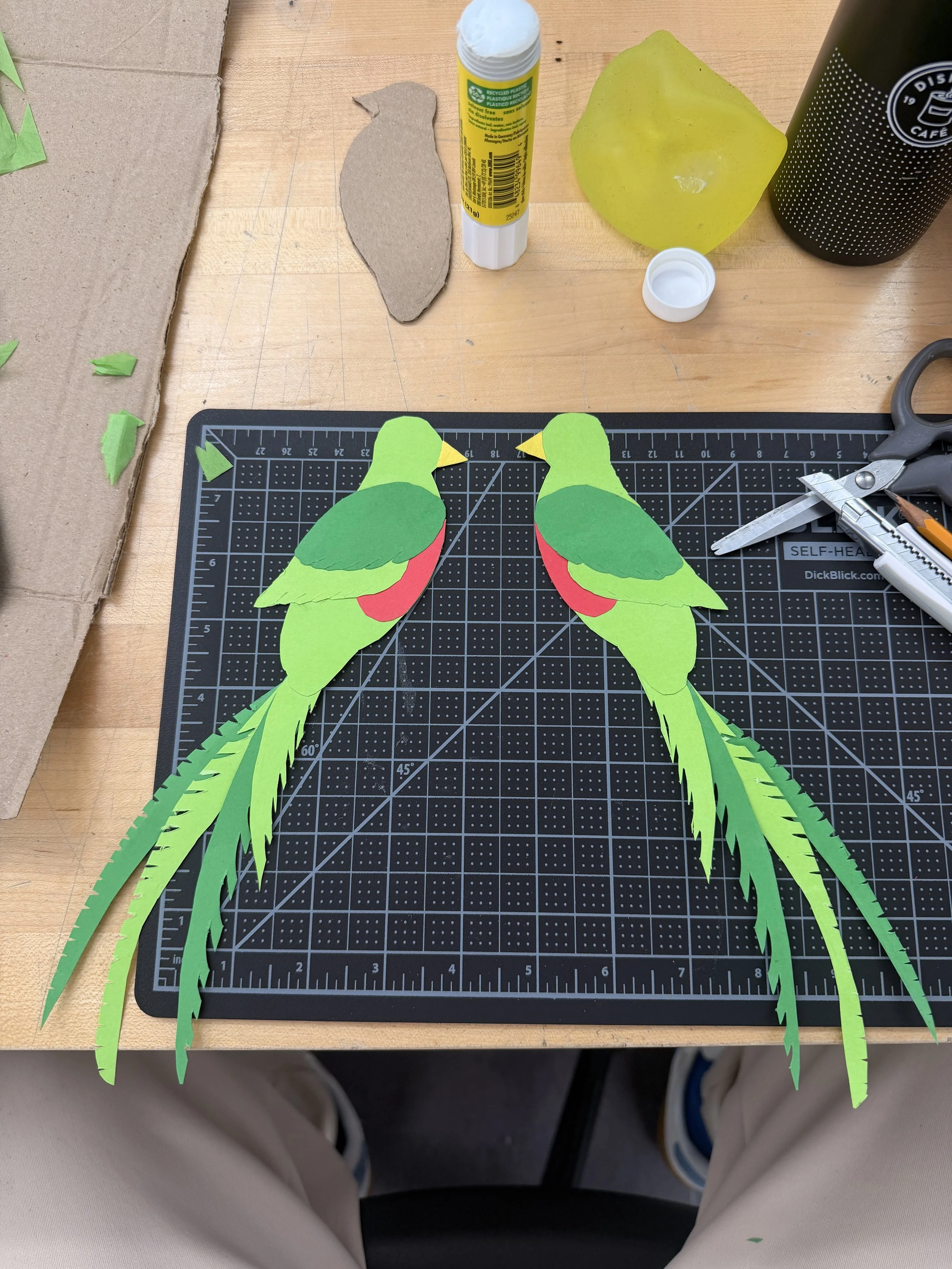
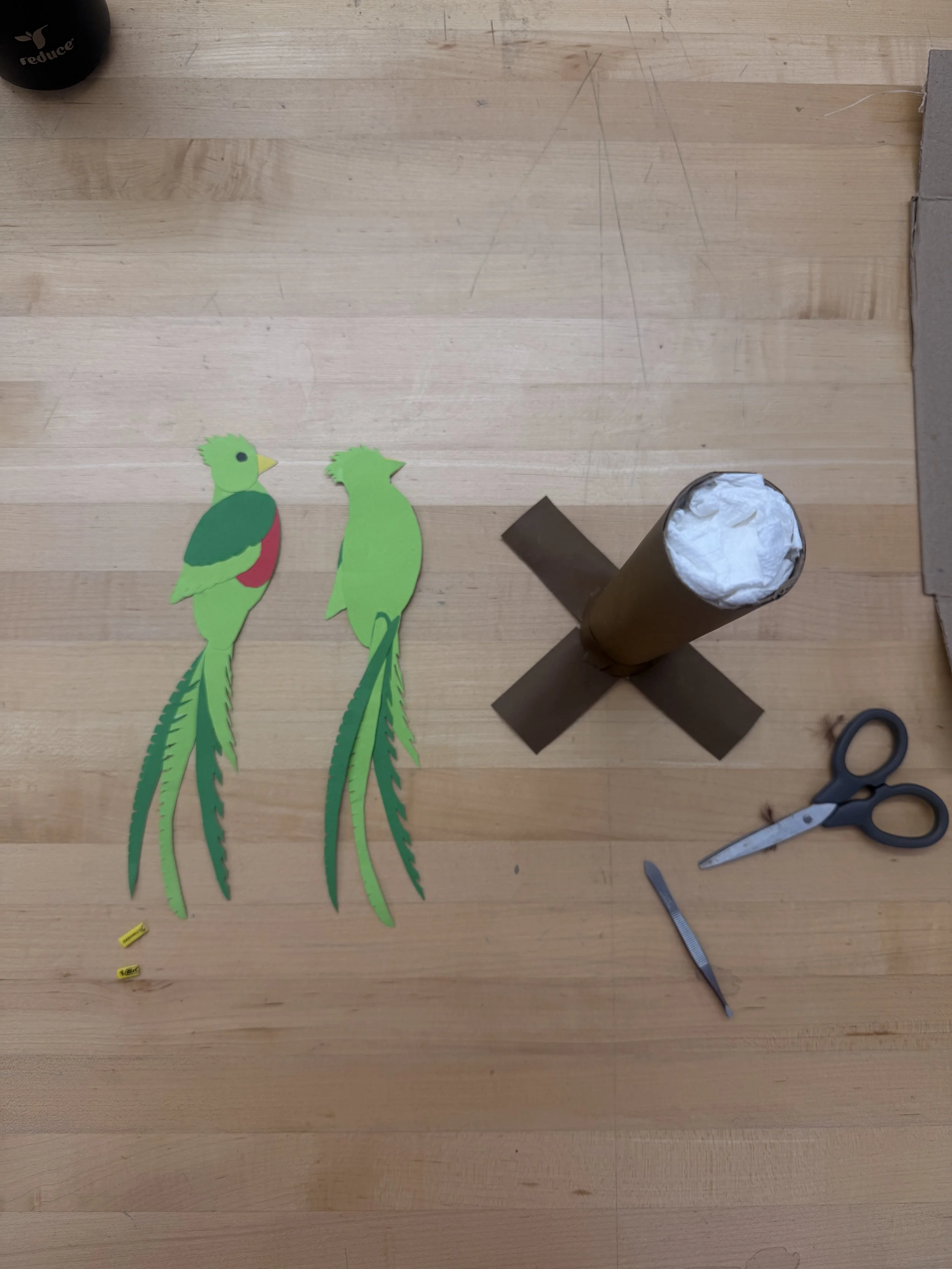
Process Book
I started by creating a moodboard and doing research to better understand my endangered animal and gather inspiration.
Based on my research and moodboard, I decided on a color palette for the final piece.
I cut and prototyped different shapes using paper to experiment with the forms and figure out how the different pieces could fit together.
Once I was happy with the shapes, I cut the final pieces using the colored paper I had selected.
I started putting the pieces together on one side of the animal, carefully layering and positioning them.
I then worked on the other side, making sure that the pieces matched and that both sides looked consistent.
Finally, I put all the different sections together to complete the final piece.
Species Research Card
Common Name: Resplendent Quetzal (Quetzal)
Scientific Name: Pharomachrus mocinno
Conservation Status:
Near Threatened globally; considered a threatened species in Guatemala. Its population has been declining largely because of habitat loss and fragmentation.
Habitat / Geographic Range:
The Resplendent Quetzal lives primarily in tropical cloud and mountain forests. Its range extends from southern Mexico through Central America to western Panama. In Guatemala, it occurs in mountainous cloud forests, including the Sierra de las Minas, the volcanic chain, and the Cloud Forest Biological Corridor.
Primary Threats:
The quetzal is especially threatened by cloud-forest loss, fragmentation, and disturbance. Agricultural expansion, changes in land use, and forest fires have reduced and divided the forests it depends on for food, nesting, and reproduction.
Interesting / Important Fact:
One thing I found particularly interesting is that the quetzal plays an important role in maintaining its own forest habitat. By eating fruits and dispersing their seeds, it helps regenerate the cloud forest.
Primary Reclaimed Materials:
My quetzal was created entirely from reclaimed materials, including recycled paper, cardboard boxes, and cardboard tubes. I chose discarded materials to connect the sculpture to conservation, reuse, and our responsibility to the natural environment.
Local Connection:
The quetzal has an especially strong connection to Guatemala. It is the country's national bird and a national symbol, representing freedom and Guatemala's natural and cultural heritage. Guatemala has established protected areas such as the Biotopo del Quetzal to conserve the bird and its cloud forest habitat.
Sources / References:
2. Public-Facing Description
The Resplendent Quetzal (Pharomachrus mocinno) is the national bird of Guatemala and an important symbol of freedom and cultural identity. Living primarily in Central America’s cloud forests, the quetzal faces threats from habitat loss and fragmentation. This sculpture is made entirely from reclaimed materials, including recycled paper, cardboard boxes, and cardboard tubes, connecting the conservation of an endangered environment with the reuse of materials that might otherwise be discarded.
3. Wall Label
Olaf Jimenez
Resplendent Quetzal
2026
Reclaimed paper, cardboard boxes, and cardboard tubes
Dimensions whole piece: 12″ × 6.5″ × 6.5″
